Impress employers and recruiters.
Choose from hundreds of resume examples.
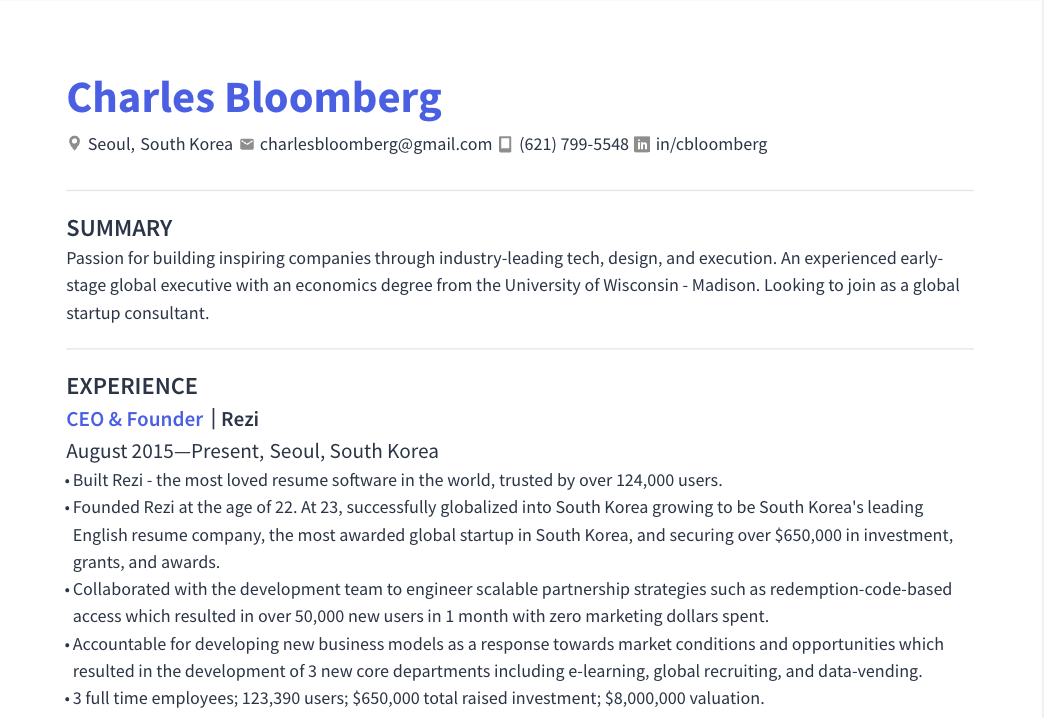
Impress employers and recruiters.
Choose from hundreds of resume examples.
Tailor your resume to this Technical Engineer (Production Liability Engineer) role.
Rezi rewrites your resume against M&T Bank's job description. Free.
Tailor your resume to this Technical Engineer (Production Liability Engineer) role.
Rezi rewrites your resume against M&T Bank's job description. Free.
Don't guess if your resume is good enough.
See how it scores against the Technical Engineer (Production Liability Engineer) posting at M&T Bank — free, in seconds.
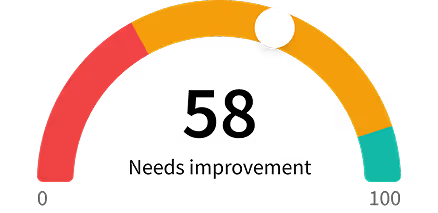
Don't guess if your resume is good enough.
See how it scores against the Technical Engineer (Production Liability Engineer) posting at M&T Bank — free, in seconds.
About the Role
The Technical Engineer serves as a senior production support and reliability engineering professional responsible for ensuring the availability, stability, performance, and operational excellence of critical business applications and platforms. This role combines strong troubleshooting expertise with modern Site Reliability Engineering (SRE), observability, automation, cloud operations, and incident management practices. The Technical Engineer partners with Engineering, Architecture, Infrastructure, Security, Product, and Vendor teams to proactively identify operational risks, improve system resilience, accelerate incident resolution, and continuously enhance customer and employee experiences. The ideal candidate possesses deep technical knowledge of application support, distributed systems, cloud technologies, monitoring platforms, automation tools, and modern operational practices. They are passionate about eliminating repetitive work through automation and leveraging AI-powered tools to improve operational efficiency and support outcomes.
Responsibilities
- Serve as a technical escalation point for critical production incidents, outages, and service degradation events.
- Lead troubleshooting and root cause analysis efforts across applications, integrations, infrastructure, cloud services, APIs, and supporting technologies.
- Coordinate incident response activities involving application teams, infrastructure teams, vendors, and business stakeholders.
- Restore service quickly while ensuring long-term corrective actions are identified and implemented.
- Participate in major incident management processes and post-incident reviews.
- Apply Site Reliability Engineering principles to improve platform reliability, scalability, resilience, and operational efficiency.
- Define and support Service Level Indicators (SLIs), Service Level Objectives (SLOs), and operational performance metrics.
- Drive reduction of operational toil through automation and process improvement.
- Support production readiness reviews and operational acceptance processes.
- Participate in disaster recovery, resiliency, failover, and business continuity testing.
- Analyze complex system behavior using logs, metrics, traces, performance data, and monitoring tools.
- Perform deep technical investigations across application, infrastructure, data, network, and cloud environments.
- Identify recurring issues, trends, and systemic problems to reduce future incidents.
- Lead root cause analysis (RCA) activities and implement preventive solutions.
- Develop technical recommendations that improve system stability, performance, and reliability.
- Design, implement, and optimize monitoring, alerting, logging, and observability solutions.
- Develop dashboards and health indicators providing visibility into application and platform performance.
- Partner with engineering teams to improve observability through instrumentation, distributed tracing, synthetic monitoring, and telemetry collection.
- Continuously refine alerting strategies to reduce false positives and alert fatigue.
- Establish operational health metrics and reliability reporting.
- Develop and maintain automation solutions that improve operational efficiency and service reliability.
- Create scripts, tools, and workflows to automate diagnostics, health checks, remediation activities, and routine support tasks.
- Leverage Infrastructure as Code (IaC) and automation frameworks where appropriate.
- Drive continuous improvement through operational automation and self-healing capabilities.
- Partner with engineering teams to integrate automation into deployment and operational workflows.
- Leverage AI and Generative AI tools to improve incident analysis, troubleshooting, knowledge management, and operational efficiency.
- Utilize AI-powered operational insights to identify patterns, anomalies, and emerging risks.
- Contribute to development of intelligent support capabilities including chatbots, operational copilots, automated RCA generation, and knowledge recommendations.
- Evaluate opportunities to improve production support through AI-enabled automation and predictive analytics.
- Promote responsible AI practices aligned with enterprise governance and security requirements.
- Develop, maintain, and continuously improve support runbooks, operational procedures, troubleshooting guides, and recovery playbooks.
- Ensure support documentation remains accurate, actionable, and aligned with production environments.
- Establish standardized operational processes supporting incident response and service recovery.
- Capture lessons learned from incidents and incorporate improvements into support practices.
- Build and maintain operational knowledge repositories to improve support consistency and reduce resolution times.
- Support cloud-hosted and hybrid application environments, including Azure-based platforms and services.
- Assist engineering teams in implementing resilient and observable cloud architectures.
- Monitor cloud resource health, performance, utilization, and operational readiness.
- Support cloud deployments, platform upgrades, and operational change activities.
- Partner with cloud engineering teams on modernization and reliability initiatives.
- Partner closely with Engineering, Product, Architecture, Infrastructure, Security, QA, and Vendor teams.
- Review operational readiness of new systems and platform enhancements.
- Mentor junior support engineers and provide technical guidance during incident response activities.
- Promote operational excellence, reliability engineering principles, and continuous improvement practices.
- Serve as a subject matter expert within assigned technology domains.
- Ensure production support activities comply with enterprise risk, security, regulatory, and audit requirements.
- Identify operational risks and escalate issues appropriately.
- Support implementation of internal controls and operational governance standards.
- Participate in audit, compliance, and regulatory review activities as required.
Requirements
- Bachelor's degree in Computer Science, Information Technology, Engineering, or equivalent experience.
- Minimum 5+ years of experience supporting enterprise applications, platforms, or infrastructure in production environments.
- Experience troubleshooting complex application, infrastructure, integration, or cloud-related issues.
- Strong knowledge of incident management, production support processes, and operational best practices.
- Experience with monitoring, observability, logging, and alerting platforms.
- Experience with scripting and automation technologies.
- Strong analytical, troubleshooting, and problem-solving skills.
- Excellent communication and collaboration skills.
- Experience with Site Reliability Engineering (SRE) practices.
- Experience defining and managing SLIs, SLOs, and operational metrics.
- Experience supporting distributed systems, APIs, microservices, and cloud-native applications.
- Experience performing production readiness reviews and operational assessments.
- Experience with platforms such as: Dynatrace, Splunk, Datadog, Azure Monitor, Grafana, Prometheus, OpenTelemetry, AppDynamics.
- Experience supporting Azure cloud environments.
- Familiarity with Azure App Services, AKS, Functions, Storage, Event Hub, Service Bus, and monitoring services.
- Understanding of cloud security and operational best practices.
- Advanced PowerShell scripting.
- Python development and automation.
- REST API integration.
- Infrastructure as Code concepts.
- CI/CD tools and deployment pipelines.
- Experience using Microsoft Copilot, Azure AI services, Microsoft Foundry, or similar AI-enabled platforms.
- Familiarity with AI-assisted troubleshooting and operational analytics.
- Experience implementing AI-enabled support workflows or knowledge management solutions.
- Understanding of intelligent automation and operational copilots.
Skills
- PowerShell
- Python
- Bash/Shell
- SQL
- REST APIs
- Workflow automation platforms
- Dynatrace
- Splunk
- Datadog
- Azure Monitor
- Grafana
- Prometheus
- OpenTelemetry
- AppDynamics
- Azure App Services
- AKS
- Functions
- Storage
- Event Hub
- Service Bus
- Microsoft Copilot
- Azure AI services
- Microsoft Foundry
- Infrastructure as Code (IaC)
- CI/CD tools
- Site Reliability Engineering (SRE)
- Incident Management
- Observability
- Automation
- Cloud Operations
- Troubleshooting
- Problem Management
- Monitoring
- Alerting
- Logging
- Distributed Systems
- APIs
- Microservices
- Cloud-Native Applications
- Production Readiness Reviews
- Operational Assessments
- Cloud Security
- AI-Assisted Operations
- Generative AI
- Knowledge Management
- Support Playbooks
- Operational Runbooks
- Continuous Improvement
- Service Level Indicators (SLIs)
- Service Level Objectives (SLOs)
Location
- Buffalo, New York, United States of America
Work Type
- Full-time
Experience Level
- Senior
- 5+ years
Education Level
- Bachelor's degree in Computer Science, Information Technology, Engineering, or equivalent experience.
Salary/Compensations
- $97,100.00 - $161,800.00 Annual (USD)
About the Company
- M&T Bank is committed to fair, competitive, and market-informed pay for our employees.