Impress employers and recruiters.
Choose from hundreds of resume examples.
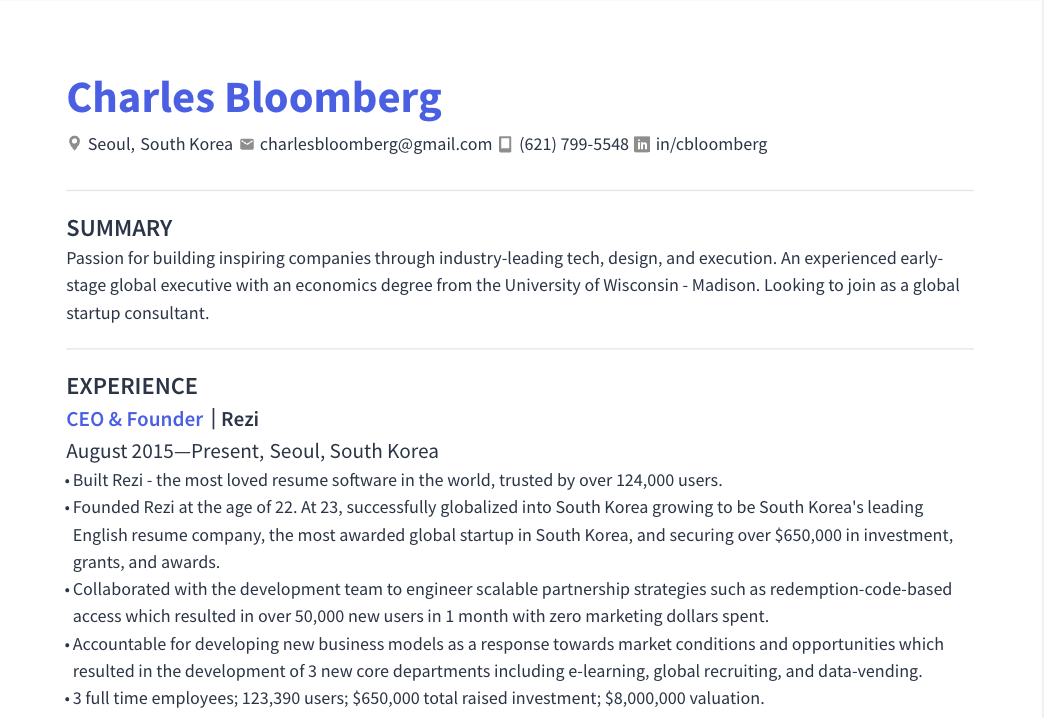
Impress employers and recruiters.
Choose from hundreds of resume examples.
Tailor your resume to this Staff ML Engineer, VLA Training role.
Rezi rewrites your resume against Nidus Technologies's job description. Free.
Tailor your resume to this Staff ML Engineer, VLA Training role.
Rezi rewrites your resume against Nidus Technologies's job description. Free.
Don't guess if your resume is good enough.
See how it scores against the Staff ML Engineer, VLA Training posting at Nidus Technologies — free, in seconds.
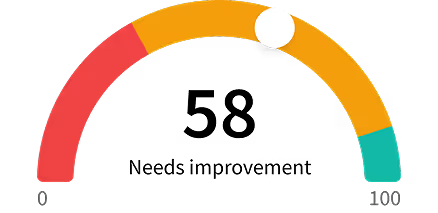
Don't guess if your resume is good enough.
See how it scores against the Staff ML Engineer, VLA Training posting at Nidus Technologies — free, in seconds.
About the Role
We are building intelligent robots that can perceive the world, understand instructions, and perform useful physical tasks in dynamic, real-world environments. We are looking for a Staff Machine Learning Engineer to develop and scale the vision-language-action models that power our robots. You will own major parts of the model development lifecycle—from dataset construction and training recipes to distributed training infrastructure, evaluation, and on-robot validation. This is a hands-on role at the intersection of machine learning research, large-scale systems, and robotics. You will work closely with researchers, robotics engineers, data teams, and operators to turn new modeling ideas into reliable robot capabilities. The right person is equally comfortable investigating why a policy failed on a robot, designing the next training experiment, and improving the infrastructure required to run that experiment efficiently at scale.
Responsibilities
- Train and improve vision-language-action models for robotic manipulation and other embodied tasks.
- Develop model architectures and training recipes spanning imitation learning, behavior cloning, transformer- and diffusion-based policies, multimodal pretraining, and post-training.
- Build scalable pipelines for pretraining, fine-tuning, evaluation, checkpointing, and model release.
- Train models across multi-node GPU clusters while improving utilization, throughput, stability, and cost efficiency.
- Design data mixtures, sampling strategies, augmentations, and curriculum approaches for large, heterogeneous robot datasets.
- Develop data loaders and preprocessing systems for synchronized video, language, robot state, actions, and other sensor modalities.
- Create reproducible experimentation systems, including configuration management, dataset and model versioning, experiment tracking, and automated regression testing.
- Define offline and on-robot metrics that measure task success, generalization, robustness, latency, safety, and failure modes.
- Build tools for inspecting trajectories, visualizing model behavior, comparing experiments, and diagnosing data or training failures.
- Run structured experiments on physical robots and use the results to guide model, data, and infrastructure improvements.
- Partner with data collection teams to identify coverage gaps, improve demonstration quality, and prioritize collection based on model performance.
- Translate promising research into maintainable, production-quality systems that can support repeated deployment across robots and environments.
- Make technical decisions across model architecture, data, compute, and evaluation, and communicate the associated tradeoffs clearly.
- Mentor other engineers and establish strong engineering practices for the ML codebase.
Requirements
- Five or more years of professional experience in machine learning, robotics, computer vision, or a closely related field, or equivalent demonstrated impact.
- Strong experience training modern deep learning models using PyTorch, JAX, or a comparable framework.
- Experience with transformer-based models, multimodal models, generative models, or learned control policies.
- Experience building and operating distributed training pipelines on multi-GPU or multi-node accelerator clusters.
- Experience with large-scale datasets, high-throughput data loading, experiment tracking, and reproducible ML workflows.
- Strong understanding of optimization, model architecture, data quality, evaluation methodology, and experimental design.
- Ability to debug failures across the full stack, from input data and training dynamics to inference and robot behavior.
- Experience independently owning technically ambiguous projects and delivering working systems.
- Clear communication skills and an ability to collaborate across research, infrastructure, robotics, hardware, and operations teams.
- A bachelor’s degree in computer science, machine learning, robotics, electrical engineering, or a related field—or equivalent practical experience.
Skills
- PyTorch
- JAX
- Transformer-based models
- Multimodal models
- Generative models
- Learned control policies
- Distributed training
- Large-scale datasets
- High-throughput data loading
- Experiment tracking
- Reproducible ML workflows
- Optimization
- Model architecture
- Data quality
- Evaluation methodology
- Experimental design
- Full-stack debugging
- Communication
- Collaboration
- Vision-language-action models
- Vision-language models
- Robotics foundation models
- Imitation learning
- Reinforcement learning
- Behavior cloning
- Diffusion policies
- Action tokenization
- Action-conditioned world models
- Multi-robot embodiment training
- Multi-task domain training
- Multi-sensor configuration training
- Large-scale pretraining
- Post-training
- Parameter-efficient fine-tuning
- Distillation
- Model adaptation
- FSDP
- Tensor parallelism
- Pipeline parallelism
- Mixed precision
- Gradient checkpointing
- Sharded data loading
- ROS/ROS 2
- MuJoCo
- Isaac Sim
- Gazebo
- Physical robotic systems deployment
- Physical robotic systems evaluation
Location
- New York City
Work Type
- In-person
Experience Level
- Staff
- Five or more years of professional experience
Education Level
- Bachelor’s degree in computer science, machine learning, robotics, electrical engineering, or a related field, or equivalent practical experience.
About the Company
- Nidus is building autonomous manufacturing systems powered by AI and robotics.
- U.S. manufacturers are under growing pressure to increase output while navigating workforce constraints, underutilized equipment, and increasingly complex supply chains.
- We believe the next generation of manufacturing will be enabled by more intelligent, flexible automation—systems that help people and machines work together to expand capacity and improve productivity.
- We're building the intelligence layer that makes that possible.
- Our team comes from the intersection of defense technology and AI.
- We've built and shipped products to DoD customers, and we bring deep experience across ML, robotics, product development, and defense.
- We're a small, in-person team in New York City working on hard problems that matter.
- If you want to build the future of American manufacturing, we'd love to hear from you.
Equal Opportunity
- Nidus Technologies is an equal opportunity employer, and qualified applicants will receive consideration for employment without regard to race, color, religion, sex, sexual orientation, gender perception or identity, national origin, age, marital status, protected veteran status, or disability status.
- We encourage candidates from all backgrounds to apply, even if you don't feel like you're a perfect fit. If you're passionate about contributing to our mission, we'd love to hear from you!