Impress employers and recruiters.
Choose from hundreds of resume examples.
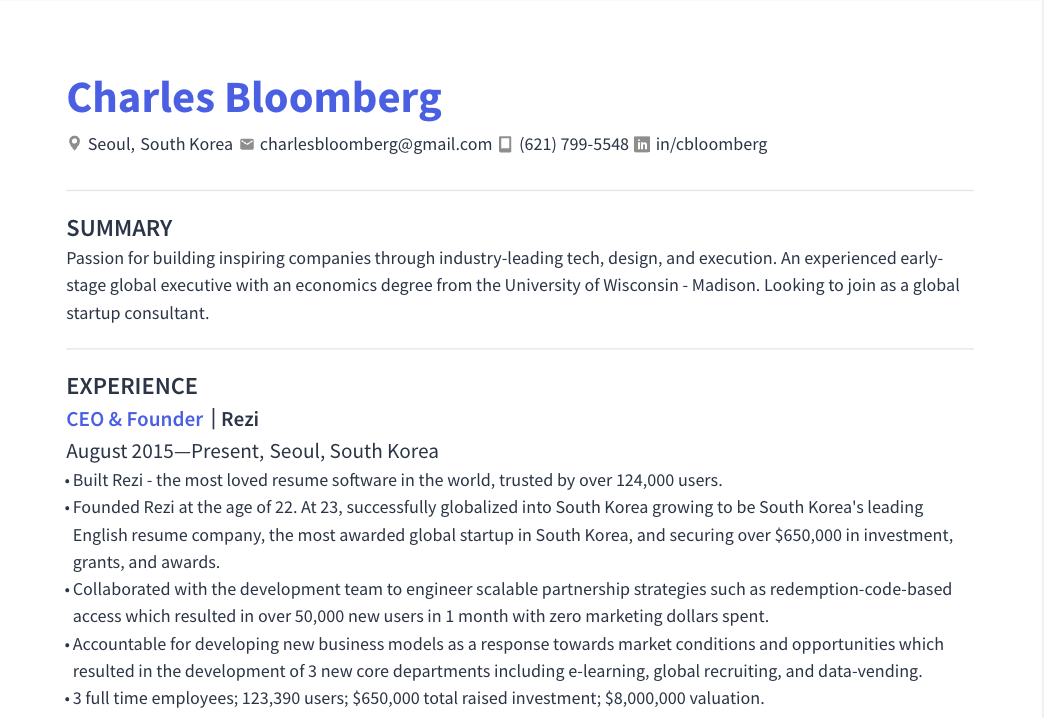
Impress employers and recruiters.
Choose from hundreds of resume examples.
Tailor your resume to this Director, Human-AI Collaboration role.
Rezi rewrites your resume against Salesforce's job description. Free.
Tailor your resume to this Director, Human-AI Collaboration role.
Rezi rewrites your resume against Salesforce's job description. Free.
Don't guess if your resume is good enough.
See how it scores against the Director, Human-AI Collaboration posting at Salesforce — free, in seconds.

Don't guess if your resume is good enough.
See how it scores against the Director, Human-AI Collaboration posting at Salesforce — free, in seconds.
About the Role
The Director, Human-AI Collaboration & Workforce Transformation will lead the strategic integration of artificial intelligence and emerging technologies to redefine jobs, roles, and organizational structures at Salesforce. This role blends deep research expertise with a strong understanding of Human-Computer Interaction (HCI) principles and a pragmatic, business-oriented approach to large-scale workforce transformation. You will design and implement new work models that enhance human capabilities, improve efficiency, and support a positive, inclusive, and productive employee experience in an increasingly AI-enabled workplace.
Responsibilities
- Pioneer research-driven work models by leading and conducting research on how AI and emerging technologies can augment human work, and translating findings into evidence-based frameworks for job design and organizational structure.
- Apply HCI and cognitive science principles to design intuitive, effective human-AI collaboration workflows that support usability, trust, and adoption.
- Partner with senior leaders to help shape the future of work at Salesforce, translating business strategy into actionable workforce transformation initiatives.
- Drive enterprise-wide transformation by supporting a culture of learning, adaptability, and innovation as the organization evolves how work is defined, performed, and managed.
- Develop scalable frameworks for job redesign and augmentation that enable business growth while supporting employee development and career progression.
- Influence and educate stakeholders by clearly communicating research insights and strategic recommendations to a wide range of audiences, including technical and non-technical partners.
- Balance agility and focus by managing multiple priorities and adapting quickly as business needs evolve.
Requirements
- Doctorate (Ph.D.) in a relevant field such as Organizational Psychology, Human-Computer Interaction, Industrial-Organizational Psychology, or a related discipline with a focus on technology and the future of work.
- 10+ years of experience in organizational design, workforce strategy, or applied research roles, including at least 5 years in a leadership capacity driving large-scale change within a corporate environment.
- Demonstrated research expertise, including a strong publication record or hands-on application of qualitative and quantitative research methods to address complex business challenges.
- Deep understanding of Human-Computer Interaction (HCI) principles and their application to designing effective human-machine systems.
- Strong business acumen, with the ability to connect research insights to measurable business outcomes and key performance indicators.
- Proven leadership and communication skills, with experience influencing senior leaders and collaborating across diverse, cross-functional teams.
- Experience leading organizational transformation efforts and integrating emerging technologies, particularly AI, into work processes.
- Experience working in large, matrixed, or global organizations.
- Background in workforce transformation, job architecture, or future-of-work initiatives within a technology-driven environment.
- Demonstrated ability to translate complex concepts into practical, actionable frameworks that resonate across varied audiences.
Skills
- Artificial Intelligence
- Human-Computer Interaction (HCI)
- Organizational Design
- Workforce Strategy
- Applied Research
- Qualitative Research
- Quantitative Research
- Leadership
- Communication
- Collaboration
- Change Management
- Emerging Technologies
Experience Level
- 10+ years of experience
- 5 years in a leadership capacity
Education Level
- Doctorate (Ph.D.)
Benefits
- Time off programs
- Medical
- Dental
- Vision
- Mental health support
- Paid parental leave
- Life insurance
- Disability insurance
- 401(k)
- Employee stock purchasing program
About the Company
- Salesforce is the #1 AI CRM, where humans with agents drive customer success together.
- The world of work as we know it is changing and we're looking for Trailblazers who are passionate about bettering business and the world through AI, driving innovation, and keeping Salesforce's core values at the heart of it all.
- Agentforce is the future of AI, and you are the future of Salesforce.
Equal Opportunity
- Salesforce is an equal opportunity employer and maintains a policy of non-discrimination with all employees and applicants for employment.
- Salesforce believes in equality for all and is committed to creating a workplace that’s inclusive, and free from discrimination.
- Any employee or potential employee will be assessed on the basis of merit, competence and qualifications – without regard to race, religion, color, national origin, sex, sexual orientation, gender expression or identity, transgender status, age, disability, veteran or marital status, political viewpoint, or other classifications protected by law.
- This policy applies to current and prospective employees, no matter where they are in their Salesforce employment journey.
- It also applies to recruiting, hiring, job assignment, compensation, promotion, benefits, training, assessment of job performance, discipline, termination, and everything in between.
- Recruiting, hiring, and promotion decisions at Salesforce are fair and based on merit.
- The same goes for compensation, benefits, promotions, transfers, reduction in workforce, recall, training, and education.