Impress employers and recruiters.
Choose from hundreds of resume examples.
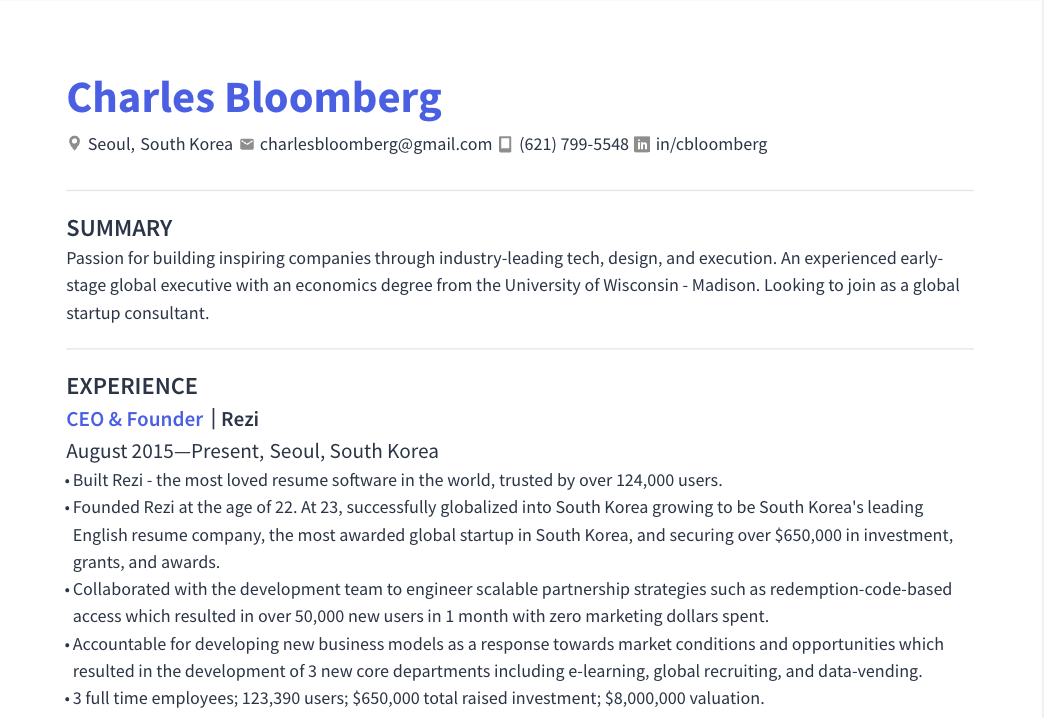
Impress employers and recruiters.
Choose from hundreds of resume examples.
Tailor your resume to this Garvan Summer Scholarship Program 2026/27 role.
Rezi rewrites your resume against Garvan Institute of Medical Research's job description. Free.
Tailor your resume to this Garvan Summer Scholarship Program 2026/27 role.
Rezi rewrites your resume against Garvan Institute of Medical Research's job description. Free.
Don't guess if your resume is good enough.
See how it scores against the Garvan Summer Scholarship Program 2026/27 posting at Garvan Institute of Medical Research — free, in seconds.
Don't guess if your resume is good enough.
See how it scores against the Garvan Summer Scholarship Program 2026/27 posting at Garvan Institute of Medical Research — free, in seconds.
About the Role
The Summer Scholarship Program offers undergraduate students the chance to engage in research projects during the summer, providing insight into the research process and potential research careers. Participants will gain invaluable experience working alongside esteemed supervisors on meaningful research projects.
Responsibilities
- Contribute to developing a deep learning method to infer cell-type-specific gene regulatory networks.
- Develop a deep learning approach that combines multi-omics evidence with perturbation signal.
- Apply the method to characterise trans-regulatory interactions linking noncoding variants to downstream immune functions and regulatory pathways.
- Build machine learning models to investigate the reactivation of developmental programs in cancer.
- Design and populate a curated peptide/protein annotation database for spatial mass spectrometry imaging.
- Investigate how HLA genes are regulated across diverse human ancestries using large-scale sequencing datasets.
- Curate a comprehensive, panel-specific marker gene list from the literature for cell type annotation in spatial transcriptomics.
- Adapt ASTRA-CYTE against manual annotations, evaluating and mitigating technical artefacts.
- Develop a pipeline to generate a corpus of synthetic rare disease case data.
- Develop a dataset and computational toolchain to perform a fair evaluation of multiple LLMs and agentic AI systems in biology.
- Build a layered prediction framework using pathology foundation models for breast cancer immunotyping.
Requirements
- Have basic coding skills and a foundational understanding of biology and genetics.
- Experience in bioinformatics, coding agents, or single-cell data analysis is highly desirable.
- Coding skills, basic knowledge of probability theory/statistics; interest in biology would help.
- Proficiency in R and/or Python, with confidence working from the command line.
- Familiarity with relational databases (such as SQL) and database design principles.
- Strong attention to detail and an interest in structured data curation and accessibility.
- No prior wet-lab or proteomics experience required, but genuine curiosity about mass spectrometry and large 'omics datasets is essential.
- Some coding experience is required.
- No prior experience in immunology is necessary, but a keen interest in the immune system is essential.
- Basic coding in Python or R.
- Strong experience in software engineering and agentic coding, and familiarity with genomic data (e.g. BAM/CRAM/VCF).
- Direct experience with unstructured clinical data, evaluations, and benchmarking is valuable but not essential.
- Candidates should have a basic understanding of human biology and genetics.
- Proficiency in coding and data analysis using shell scripting, python, R, or Rust is preferable.
- Experience in statistical genetics, data engineering, and software development is highly desirable.
- Should have foundational skills and knowledge in coding and basic understanding of human biology and genetics.
- Familiarity with LLM and agentic AI frameworks (e.g., LangChain or LangGraph) and LLM APIs (e.g., OpenAI or Anthropic APIs) would be advantageous.
- Experience in AI evaluations and software development is highly desirable.
- Working proficiency in Python (essential), exposure to PyTorch, image analysis, or single-cell/spatial transcriptomics is an advantage, command line and HPC/GPU skills will be developed during the project.
Skills
- Deep learning
- Single-cell multi-omics
- CRISPR perturbation data
- Gene regulatory networks
- Machine learning
- Computational biology
- Database design
- Curation
- Python
- R
- SQL
- Spatial mass spectrometry imaging
- Statistical genetics
- Spatial transcriptomics
- Marker-based cell typing
- Benchmarking computational methods
- Agentic AI
- Genomic data
- Large language models (LLM)
- AI evaluations
- Software engineering
- PyTorch
- Image analysis
- Command line
- HPC/GPU
Location
- Sydney
Work Type
- Summer Scholarship Program
- Full-time
Experience Level
- Undergraduate students
Education Level
- Undergraduate
Salary/Compensations
- $5,000 - $6,250
- $625 per week
About the Company
- Garvan Institute of Medical Research is an independent Medical Research Institute (MRI) in Sydney, delivering scientific and clinical impact on a global basis and in partnership with organisations that share our vision.
- We are proud to be one of Australia’s largest and most highly regarded MRI’s.
- Our vision is global leadership in discoveries to impact and our enduring purpose is to impact human health, by harnessing information encoded in our genome.
- We seek to see our world-class discovery research achieve life-changing impacts, not only for individual patients with rare diseases, but for the many thousands affected by complex, common disease.
Equal Opportunity
- Garvan promotes a diverse workplace and is committed to the principles of equity, diversity, inclusion and belonging.
- We are always looking for culture ‘add’, not culture ‘fit’ and are building diverse teams with great sets of complementary styles and skills to help deliver our important work effectively.