Impress employers and recruiters.
Choose from hundreds of resume examples.
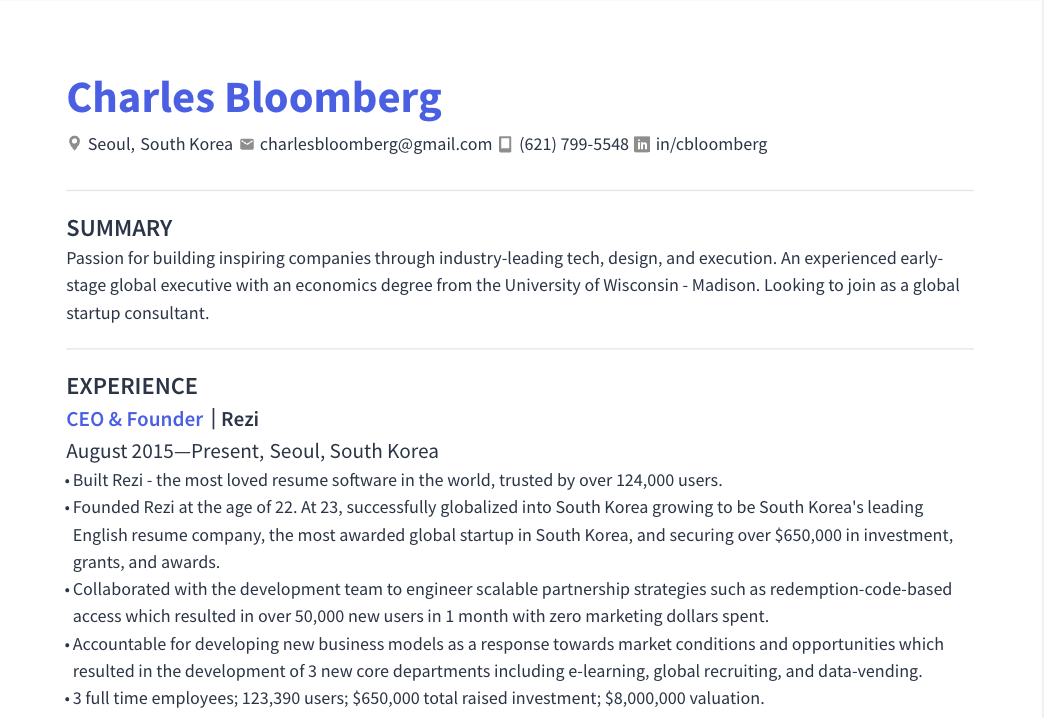
Impress employers and recruiters.
Choose from hundreds of resume examples.
Tailor your resume to this Machine Learning Engineer role.
Rezi rewrites your resume against Focused's job description. Free.
Tailor your resume to this Machine Learning Engineer role.
Rezi rewrites your resume against Focused's job description. Free.
Don't guess if your resume is good enough.
See how it scores against the Machine Learning Engineer posting at Focused — free, in seconds.
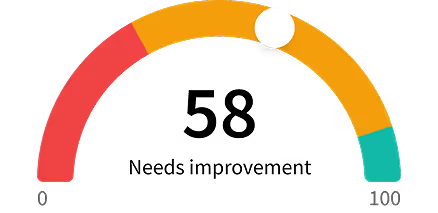
Don't guess if your resume is good enough.
See how it scores against the Machine Learning Engineer posting at Focused — free, in seconds.
About the Role
This role sits at the intersection of ML engineering and computational physics, working within our Software Engineering & Digital Twin environments. You'll collaborate closely with optical engineers, laser and fusion physicists, simulation scientists, and systems engineers to embed data-driven intelligence directly into our Digital Twin architecture. You’ll be reducing design risk, shortening development timelines, and unlocking system-level optimization that purely physics-based approaches can't achieve at the speed we need. You will design, build, and deploy machine learning models that enhance, accelerate, and augment our multiphysics simulation environments across our high-energy laser systems, target injection and tracking system, target manufacturing system, and fusion chamber. This will enable faster design cycles, predictive system optimization, and real-time decision support across our laser, targetry, and fusion programs.
Responsibilities
- Design and deploy surrogate and reduced-order models (ROMs) that replace or accelerate high-fidelity multiphysics simulations in the Digital Twin environment
- Develop physics-informed machine learning (PIML) and physics-informed neural networks (PINNs) that embed physical constraints (Maxwell's equations, thermodynamics, fluid dynamics) directly into model architectures
- Build and maintain ML pipelines for training, validation, uncertainty quantification (UQ), and continuous model refinement against experimental and simulation data
- Implement active learning and Bayesian optimization workflows to intelligently guide design space exploration and reduce costly simulation runs
- Integrate trained ML models into the broader Digital Twin framework, interfacing with HPC simulation outputs (COMSOL, ANSYS, custom solvers) and real-time sensor data
- Develop anomaly detection and predictive diagnostics models to monitor system health and identify off-nominal behavior in laser subsystems
- Apply reinforcement learning and Bayesian control approaches to support autonomous or semi-autonomous optimization of laser operating parameters
- Collaborate with Digital Twin architects, systems engineers, and optical simulation scientists to ensure ML models meet fidelity, latency, and uncertainty requirements
- Establish best practices for model versioning, reproducibility, testing, and documentation in a fast-moving research environment
Requirements
- Master's or PhD in Machine Learning, Computational Physics, Applied Mathematics, Data Science, Computer Science, or a closely related field
- Proven experience building, training, and deploying ML models for complex physical systems
- Strong command of deep learning (PyTorch, TensorFlow/JAX), probabilistic models, and uncertainty quantification
- Expert-level Python
- Proficiency in C++ or Fortran a plus
- Experience with HPC environments (batch schedulers, MPI/OpenMP parallelization)
- Fluency working with PDE-based simulation outputs, time-series sensor data, and high-dimensional parameter spaces typical of multiphysics environments
- Hands-on experience with Gaussian processes, neural network surrogates, reduced-order models, or equivalent metamodeling techniques
- Experience building robust ML pipelines for scientific data — including preprocessing, feature engineering, model validation, and deployment
- Ability to communicate model behavior, confidence intervals, and limitations clearly to physicists, engineers, and non-ML specialists
- Strong cross-functional team skills; comfort working in an interdisciplinary environment spanning physics, engineering, and software
- Experience with physics-informed neural networks (PINNs) or neural operators (DeepONet, FNO) applied to physical systems
- Background in laser physics, plasma physics, high-energy-density science, or related complex physics domains
- Experience with digital twin platforms and live integration of ML models with simulation environments (e.g., NVIDIA Omniverse, Siemens Xcelerator, ANSYS Twin Builder)
- Familiarity with multidisciplinary design optimization (MDO) workflows, including Design of Experiments (DoE), sensitivity analysis, and uncertainty propagation
- Experience applying reinforcement learning to physical system control or optimization
- Familiarity with Monte Carlo methods and statistical uncertainty quantification frameworks
- Experience with MLOps tooling (MLflow, Weights & Biases, DVC) in a scientific computing context
- Interest in fusion energy, advanced laser systems, or high-energy-density physics
Skills
- Machine Learning
- Computational Physics
- Applied Mathematics
- Data Science
- Computer Science
- Deep Learning
- PyTorch
- TensorFlow
- JAX
- Probabilistic Models
- Uncertainty Quantification
- Python
- C++
- Fortran
- HPC environments
- MPI
- OpenMP
- PDE-based simulation outputs
- Time-series sensor data
- Multiphysics environments
- Gaussian processes
- Neural network surrogates
- Reduced-order models
- Metamodeling techniques
- ML pipelines
- Scientific data preprocessing
- Feature engineering
- Model validation
- Model deployment
- Physics-informed neural networks (PINNs)
- Neural operators
- Laser physics
- Plasma physics
- High-energy-density science
- Digital twin platforms
- Multidisciplinary design optimization (MDO)
- Design of Experiments (DoE)
- Sensitivity analysis
- Uncertainty propagation
- Reinforcement learning
- Monte Carlo methods
- MLOps tooling
- MLflow
- Weights & Biases
- DVC
Location
- Germany
- US
Work Type
- Full-time
Experience Level
- Master's or PhD
- Proven experience
Education Level
- Master's Degree
- PhD
Benefits
- Company ownership in the form of stock options
- Medical
- Dental
- Vision
- Unlimited PTO
- Snacks and Drinks
- 401k plan with company match up to 4%
- State-of-the-art Windows or Apple Laptops
- Keyboard
- Mouse
- Headset
- Regular events for team bonding and collaboration
About the Company
- Focused Energy is building the future of clean energy through laser-driven inertial fusion.
- Backed by our $240M Series A — the largest fully secured Series A in the global fusion industry — we are scaling rapidly across multiple geographies.
- Based in Germany and the US, we have brought together the top scientific and engineering minds using proven technologies to unlock fusion power at commercial scale.
- Focused Energy is working to realize game-changing scientific innovation that promises to deliver a clean, sustainable and abundant source of power globally.
Equal Opportunity
- Focused Energy is an equal opportunity employer committed to creating an inclusive environment. Qualified applicants will receive consideration for employment without regard to race, color, religion, sex, sexual orientation, gender perception or identity, national origin, age, marital status, protected veteran status, or disability status.
- Pursuant to the San Francisco Fair Chance Ordinance, Focused Energy will consider for employment qualified applicants with arrest and conviction records.