Impress employers and recruiters.
Choose from hundreds of resume examples.
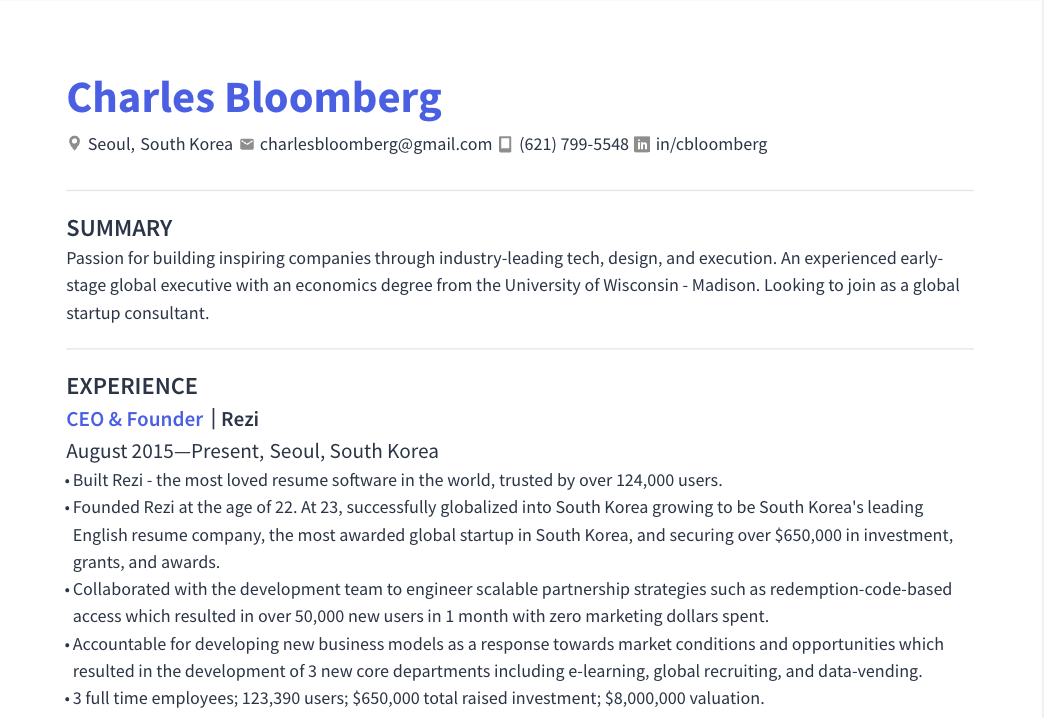
Impress employers and recruiters.
Choose from hundreds of resume examples.
Tailor your resume to this Analytics & Evaluation Lead - Shkaabe Makwa role.
Rezi rewrites your resume against CAMH's job description. Free.
Tailor your resume to this Analytics & Evaluation Lead - Shkaabe Makwa role.
Rezi rewrites your resume against CAMH's job description. Free.
Don't guess if your resume is good enough.
See how it scores against the Analytics & Evaluation Lead - Shkaabe Makwa posting at CAMH — free, in seconds.
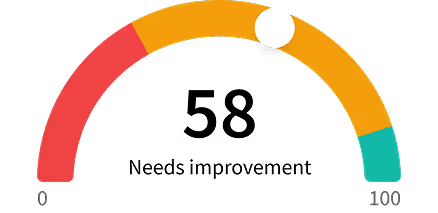
Don't guess if your resume is good enough.
See how it scores against the Analytics & Evaluation Lead - Shkaabe Makwa posting at CAMH — free, in seconds.
About the Role
Shkaabe Makwa at CAMH is seeking an Analytics & Evaluation Lead to contribute to the development and implementation of a Shkaabe Makwa-wide performance measurement system. This role will provide technical support for data structures, dashboards, reporting tools, analytic processes, and performance measurement infrastructure to monitor, understand, and communicate the impact of Shkaabe Makwa’s work.
Responsibilities
- Support the design and implementation of culturally responsive analytical approaches appropriate to Indigenous health contexts and aligned with Indigenous data governance principles.
- Review and analyze clinical outcome data, service utilization data, and qualitative data.
- Conduct analyses of secondary and original data.
- Contribute to the conceptual design and planning of evaluation plans.
- Coordinate work with partners.
- Develop dashboards.
- Analyze data.
- Integrate data at multiple levels.
- Apply performance measurement and quality improvement approaches to analyze qualitative and quantitative data.
- Support reporting, learning, and decision-making across Shkaabe Makwa.
- Collaborate with partners, including staff, leadership, Indigenous partners, CAMH data teams, and program teams.
- Design and implement robust data analysis and collection processes, ensuring accuracy, reliability, and appropriate interpretation.
- Collaborate closely with the Shkaabe Makwa Evaluation and Performance Measurement team to conduct monitoring and reporting activities.
- Utilize statistical software packages such as R, SAS, or Python to execute computer programs for data extraction, analysis, and visualization.
- Analyze and interpret data from diverse sources, including program databases, training data, service data, survey data, administrative data, Statistics Canada data, and other public health databases.
- Plan, coordinate, and oversee all aspects of data collection/analysis activities related to performance measurement, evaluation, reporting, and impact measurement.
- Support the development of indicators, including indicators related to reach, quality, experience, outcomes, relationships, partnerships, learning, and system-level contribution.
- Develop and maintain dashboards, data visualizations, indicator trackers, reporting templates, and other tools to support routine monitoring, reporting, and decision-making.
- Identify and map existing data sources across Shkaabe Makwa programs and identify data gaps, duplication, limitations, and opportunities for stronger data collection, reporting, and use of data.
- Translate complex technical findings into clear, actionable insights for diverse audiences.
- Engage with relevant partners to understand existing challenges and opportunities for improvement.
- Enhance Shkaabe Makwa teams’ capacity for complex data analysis through knowledge sharing and mentorship.
- Visualize organizational data effectively to derive insights and communicate value to partners.
- Support appropriate approaches to First Nations, Inuit and Métis data, including attention to Indigenous data governance, Indigenous data sovereignty, cultural safety, consent, stewardship, interpretation, and use.
- Support in result interpretation and preparation of materials for presentations, publications, and grant applications.
- Perform other duties as assigned.
Requirements
- A Master's degree in Public Health, Social or Behavioral Sciences, Health Services, or Data Analytics.
- A minimum of five years of relevant experience.
- Prior experience in data analytics, performance measurement, and evaluation within the mental health sector, preferably in Indigenous health, or initiatives serving First Nations, Inuit, and Métis communities.
- Proficiency in handling complex datasets, designing and developing dashboards, and generating routine and ad-hoc reports.
- Demonstrated commitment to equity, anti-racism, and anti-oppression principles and practices.
- Ability to develop and implement procedures to safeguard the confidentiality, integrity, and availability of Personal Health Information (PHI) and other data.
- Strong analytical and problem-solving skills, with the ability to draw logical conclusions and recommend practical solutions.
- Strong collaborative skills, with the capacity to work effectively in interdisciplinary teams and foster a culture of teamwork and knowledge sharing.
- Advanced proficiency in at least one statistical software package such as R, Python, SQL, MS Power BI, or SAS.
- Thorough understanding and application of evaluation and performance measurement methods in health and mental health contexts.
- Ability to manage high-priority tasks and adapt to unscheduled requests and challenges effectively.
- Commitment to staying current with advancements in data analytics methodologies, tools, and technologies through ongoing professional development, training, and participation in relevant workshops.
- Proficiency in Microsoft Office including Word, Excel, and PowerPoint and Project is required.
Skills
- Data analysis
- Performance measurement
- Evaluation
- Data collection
- Data analysis
- Dashboard development
- Reporting
- Learning
- Decision-making
- Culturally responsive analytical approaches
- Indigenous data governance principles
- Clinical outcome data analysis
- Service utilization data analysis
- Qualitative data analysis
- Data integration
- Secondary data analysis
- Original data analysis
- Evaluation plan design
- Performance measurement
- Quality improvement approaches
- Statistical software packages (R, SAS, Python)
- Data extraction
- Data visualization
- Diverse data source analysis (program databases, training data, service data, survey data, administrative data, Statistics Canada data, public health databases)
- Indicator development
- Dashboard development
- Data visualization
- Indicator trackers
- Reporting templates
- Data source mapping
- Data gap identification
- Data duplication identification
- Data limitations identification
- Data collection improvement
- Data reporting improvement
- Data use improvement
- Translating technical findings into actionable insights
- Knowledge sharing
- Mentorship
- Organizational data visualization
- Indigenous data governance
- Indigenous data sovereignty
- Cultural safety
- Consent
- Stewardship
- Interpretation
- Use of First Nations, Inuit and Métis data
- Result interpretation
- Presentation preparation
- Publication preparation
- Grant application preparation
- Handling complex datasets
- Generating routine and ad-hoc reports
- Equity
- Anti-racism
- Anti-oppression
- OCAP®
- CARE Principles
- Distinctions-based approaches
- Safeguarding data confidentiality, integrity, and availability
- Problem-solving
- Interdisciplinary teamwork
- Teamwork culture
- Knowledge sharing culture
- R
- Python
- SQL
- MS Power BI
- SAS
- Power BI dashboard development
- SQL
- Data cleaning
- Data modelling
- Automated/semi-automated reporting workflows
- Microsoft Office (Word, Excel, PowerPoint, Project)
Location
- Ontario
Work Type
- Full-time
- Contract (12 months)
Experience Level
- Minimum of five years of relevant experience
- Prior experience in data analytics, performance measurement, and evaluation within the mental health sector, preferably in Indigenous health, or initiatives serving First Nations, Inuit, and Métis communities.
Education Level
- Master's degree in Public Health, Social or Behavioral Sciences, Health Services, or Data Analytics
Salary/Compensations
- Hiring range of $93,822.73 – $117,278.41 per year
- Full pay range of $93,822.73 – $140,734.09 per year
Benefits
- Participation in HOOPP defined benefit pension plan
- Flexible work arrangements
- Ongoing professional development support
About the Company
- Shkaabe Makwa at CAMH is the first Indigenous-led hospital-based Centre in Canada established to improve the health and wellbeing of First Nations, Inuit, and Métis across Ontario by advancing wholistic models of mental health and wellness care that are rooted in traditional healing practices.
- We deliver care, co-design research, and mobilize knowledge and tools to transform health systems.
- We action community-identified solutions to foster health justice.
- The Evaluation and Performance Measurement team supports Shkaabe Makwa in understanding, monitoring, and communicating the impact of its work.
- CAMH is a fully affiliated teaching hospital and research institute of the University of Toronto.
- As a CAMH employee, you will contribute to our mission by supporting teaching, research, and clinical care across the hospital.
- Through its core values of Courage, Respect and Excellence, CAMH is implementing its Strategic Plan: Connected CAMH, to transform lives, ignite innovation and discovery, revolutionize education and drive social change.
- CAMH is more than a hospital, it is a cause.
- CAMH is on a mission to change the way society thinks about and responds to mental illness.
- They aim to eliminate prejudice and discrimination and shape a world where mental illness is central to our healthcare system – a world where Mental Health is Health.
- To learn more about CAMH, please visit their website at: www.camh.ca.
- To view our Land Acknowledgment, please click here.
Equal Opportunity
- CAMH is dedicated to equity, diversity, and inclusion. Our commitment is to foster a workplace, teaching, and learning environment that is inclusive, respectful, and free from discrimination or harassment.
- CAMH strongly encourages applications from candidates who reflect the diversity of the communities we serve, including First Nations, Métis, and Inuit Peoples; Black and other racialized communities; LGBTQ2S+ communities; women; and people with disabilities, including those with lived experience of mental health and substance use challenges.
- We welcome applicants from all backgrounds.
- Thank you to all who apply; however, only those selected for an interview will be contacted.
- If you require accommodations during the application or recruitment process, please let us know.