Impress employers and recruiters.
Choose from hundreds of resume examples.
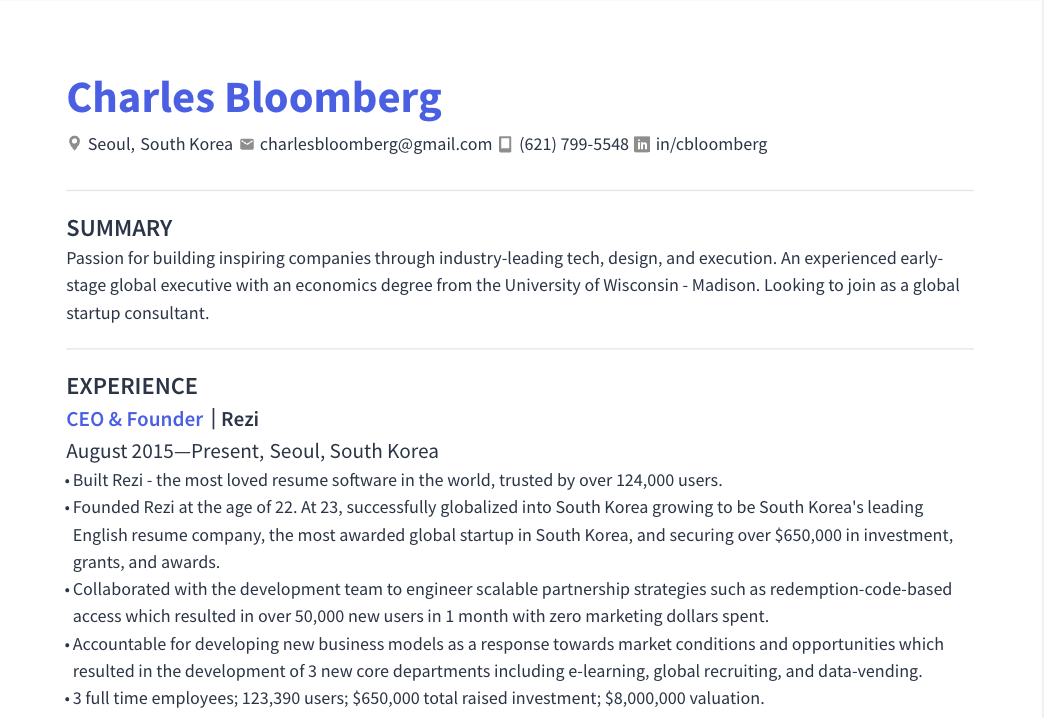
Impress employers and recruiters.
Choose from hundreds of resume examples.
Tailor your resume to this Senior Autonomy Integration Engineer role.
Rezi rewrites your resume against Shield AI's job description. Free.
Tailor your resume to this Senior Autonomy Integration Engineer role.
Rezi rewrites your resume against Shield AI's job description. Free.
Don't guess if your resume is good enough.
See how it scores against the Senior Autonomy Integration Engineer posting at Shield AI — free, in seconds.
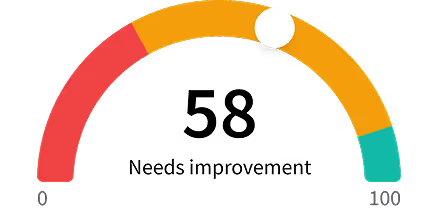
Don't guess if your resume is good enough.
See how it scores against the Senior Autonomy Integration Engineer posting at Shield AI — free, in seconds.
About the Role
This position is ideal for an individual who thrives on solving complex integration challenges that span hardware, software, and systems engineering. A successful candidate will be skilled at deploying autonomy solutions onto unmanned platforms, preparing systems for flight, and troubleshooting mission-critical issues in both lab and field environments. The role is highly dynamic, requiring hands-on experience, strong systems thinking, and the ability to operate effectively in fast-paced, real-world test conditions. Our Flight Integration Engineers are essential to bridging the gap between R&D and deployment, ensuring that autonomous systems function reliably and effectively when and where they are needed most.
Responsibilities
- Integrate autonomy software onto unmanned aircraft systems, ensuring seamless operation across onboard compute, sensors, and control interfaces.
- Own the build, configuration, and validation process for flight-ready systems; coordinate hardware/software compatibility and mission readiness.
- Travel to test sites and support live flight operations, including safety checks, system bring-up, and troubleshooting under time-critical constraints.
- Diagnose and resolve integration issues across complex autonomy software stacks and embedded systems in lab and field environments.
- Manage data collection during missions and post-test analysis, working with autonomy engineers to refine behaviors and identify improvements.
- Work closely with autonomy, GNC, systems, and test teams to ensure mission-critical functionality is delivered on time and validated thoroughly.
- Build tools and processes to improve integration timelines, flight test reliability, and team efficiency across deployment cycles.
- Assist with documentation and system-level validation required for certification, airworthiness, and compliance in defense-relevant environments.
- Members of this team typically travel around 30-40% of the year (to different office locations, customer sites, and flight integration events).
Requirements
- BS/MS in Computer Science, Electrical Engineering, Mechanical Engineering, Aerospace Engineering, and/or similar degree, or equivalent practical experience.
- Typically requires a minimum of 7 years of related experience with a Bachelor’s degree; or 5 years and a Master’s degree; or 4 years with a PhD; or equivalent work experience.
- Proficiency in programming languages such as C++ and Python, and familiarity with real-time operating systems (RTOS).
- Proficiency in Linux-based development and experience working with embedded systems, shell scripting, and system diagnostics.
- Knowledge of sensor integration, sensor fusion, and middleware frameworks (e.g., ROS, DDS).
- Hands-on experience supporting flight demos or live exercises.
- Experience with simulation tools and environments for testing and validation.
- Strong problem-solving skills, with the ability to troubleshoot and optimize system performance.
- Excellent communication and teamwork skills, with the ability to work effectively in a collaborative, multidisciplinary environment.
- Direct experience supporting unmanned aerial systems or similar flight test campaigns.
- Familiarity with autonomy stacks, flight control systems, or GNC pipelines.
- Competence in sensor integration, electronics debugging, or avionics bring-up.
- Proficiency in developing automation tools for system testing, logging, and data parsing.
- Comfortable interfacing with DoD stakeholders during field events or technical reviews.
- Experience with UCI and OMS Standards.
Skills
- C++
- Python
- Real-time operating systems (RTOS)
- Linux-based development
- Embedded systems
- Shell scripting
- System diagnostics
- Sensor integration
- Sensor fusion
- Middleware frameworks (e.g., ROS, DDS)
- Simulation tools
- Problem-solving
- Communication
- Teamwork
- Unmanned aerial systems
- Autonomy stacks
- Flight control systems
- GNC pipelines
- Electronics debugging
- Avionics bring-up
- Automation tools
- DoD stakeholder interfacing
- UCI Standards
- OMS Standards
Experience Level
- 7 years of related experience with a Bachelor’s degree
- 5 years of related experience with a Master’s degree
- 4 years of related experience with a PhD
Education Level
- BS/MS in Computer Science, Electrical Engineering, Mechanical Engineering, Aerospace Engineering, and/or similar degree, or equivalent practical experience.
Benefits
- Comprehensive total rewards package aligned to your country office location.
About the Company
- Founded in 2015, Shield AI is a venture-backed defense-tech company with the mission of protecting service members and civilians with intelligent systems.
- Its products include Hivemind autonomy software and V-BAT and X-BAT aircraft.
- With offices and facilities across the U.S., Europe, the Middle East, and Asia-Pacific, Shield AI’s technology actively supports operations worldwide.
- For more information, visit www.shield.ai.
- Follow Shield AI on LinkedIn, X, Instagram, and YouTube.