Impress employers and recruiters.
Choose from hundreds of resume examples.
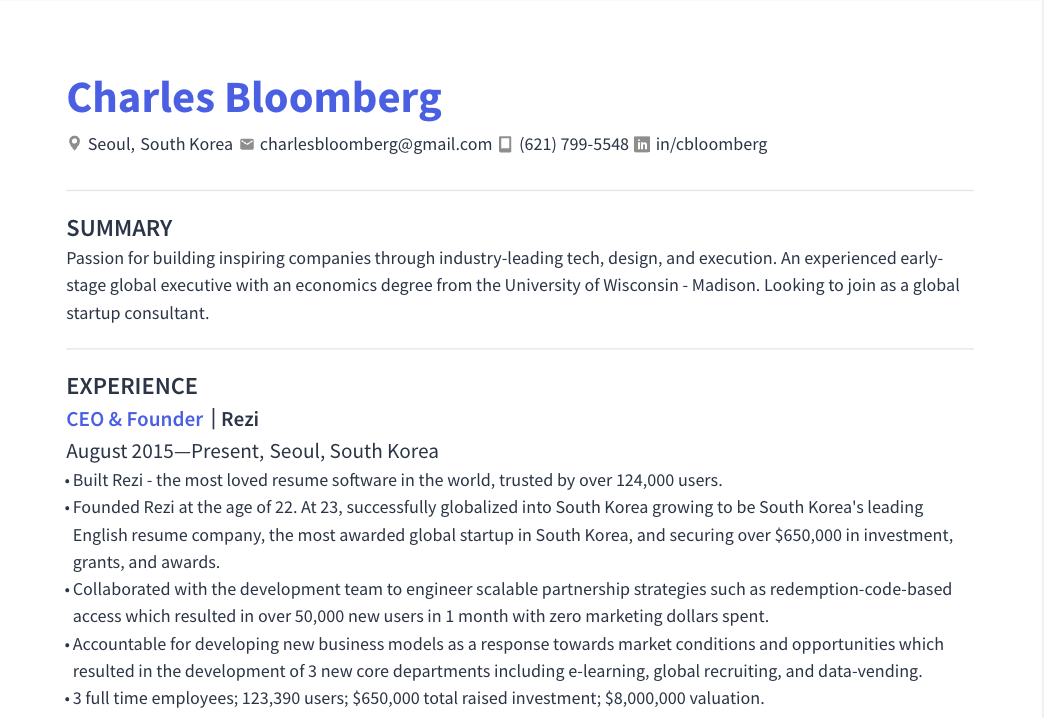
Impress employers and recruiters.
Choose from hundreds of resume examples.
Target Resume Now
About the Role
AlphaSense is seeking a Desktop System Software Engineer II for the Corporate Technology team. This role focuses on enterprise endpoint engineering and desktop application diagnostics, managing the health, behavior, and configuration of macOS and Windows endpoints at a systems level. You will act as a technical liaison between Corporate IT and the AlphaSense product engineering organization, with a focus on the performance of AlphaSense's desktop applications on managed devices.
Responsibilities
- Collaborate on the strategy and execution of macOS and Windows endpoint configuration, policy enforcement, and lifecycle management via Kandji/Iru and/or Microsoft Intune.
- Build, maintain, and iterate on device enrollment workflows, configuration profiles, compliance policies, and custom scripts.
- Design and enforce software deployment, patch management, and application allowlisting/blocklisting strategies.
- Collaborate with Security on EDR, Zero Trust, and identity integrations at the endpoint layer.
- Maintain scripting libraries (Bash, Python, PowerShell) to automate endpoint management tasks.
- Serve as a primary technical escalation point for issues users experience within AlphaSense's desktop applications on managed endpoints.
- Reproduce client-side issues across macOS and Windows versions, app build versions, and endpoint configurations to isolate root causes.
- Investigate and diagnose desktop application behavior including crash analysis, rendering issues, performance degradation, update/upgrade failures, and OS-level permission or sandboxing conflicts.
- Partner with product engineering teams to log detailed bug reports, provide environmental context, and validate fixes.
- Capture crash logs, console output, network traces, and system-level diagnostics to accelerate resolution of complex application-layer problems.
- Maintain a diagnostic runbook library covering common desktop application issues on Kandji/Iru- and Intune-managed devices.
- Test new desktop application releases against the managed device baseline before broad rollout, flagging regressions early.
- Monitor endpoint fleet health, identify systemic issues, and drive proactive remediation.
- Contribute to internal tooling and automation to improve IT operations.
- Document configurations, processes, and runbooks in the team's knowledge base.
- Participate in incident response for endpoint-related security events.
Requirements
- 3–5 years of experience in a systems engineering, endpoint engineering, or desktop platform role.
- Deep hands-on experience with macOS and/or Windows at a configuration and troubleshooting level beyond standard user support.
- Demonstrated experience with one or more enterprise MDM platforms: Kandji/Iru, Jamf Pro, or Microsoft Intune.
- Proficiency in at least one scripting language: Bash, Python, or PowerShell.
- Hands-on experience diagnosing desktop application issues — including crash log analysis, OS permission models, app sandboxing, auto-update mechanisms, and the interaction between security tooling and application runtime behavior.
- Familiarity with enterprise security tools (EDR, Zero Trust/CASB, identity platforms) and how they can affect desktop application behavior.
- Ability to write clear, detailed bug reports and escalation summaries.
- Strong written communication skills — able to produce runbooks, diagnostic guides, and engineering documentation.
Skills
- macOS
- Windows
- Kandji/Iru
- Microsoft Intune
- Jamf Pro
- Bash
- Python
- PowerShell
- Crash log analysis
- OS permission models
- App sandboxing
- Auto-update mechanisms
- EDR
- Zero Trust/CASB
- Identity platforms
- Electron-based desktop applications
- CrowdStrike Falcon
- Cloudflare Zero Trust / WARP
- Okta device trust
- Jira Service Management
Location
- New York City
Work Type
- Full-time
Experience Level
- 3-5 years
Salary/Compensations
- $80,000—$110,000 USD
Benefits
- Performance-based bonus
- Equity
- Generous benefits program
About the Company
- The world’s most sophisticated companies rely on AlphaSense to remove uncertainty from decision-making.
- Market intelligence and search built on proven AI, AlphaSense delivers insights that matter from content you can trust.
- Our universe of public and private content includes equity research, company filings, event transcripts, expert calls, news, trade journals, and clients’ own research content.
- The acquisition of Tegus by AlphaSense in 2024 advances our shared mission to empower professionals to make smarter decisions through AI-driven market intelligence.
- Together, AlphaSense and Tegus will accelerate growth, innovation, and content expansion, with complementary product and content capabilities that enable users to unearth even more comprehensive insights from thousands of content sets.
- Our platform is trusted by over 6,000 enterprise customers, including a majority of the S&P 500.
- Founded in 2011, AlphaSense is headquartered in New York City with more than 2,000 employees across the globe and offices in the U.S., U.K., Finland, India, Singapore, Canada, and Ireland.
Equal Opportunity
- AlphaSense is an equal-opportunity employer.
- We are committed to a work environment that supports, inspires, and respects all individuals.
- All employees share in the responsibility for fulfilling AlphaSense’s commitment to equal employment opportunity.
- AlphaSense does not discriminate against any employee or applicant on the basis of race, color, sex (including pregnancy), national origin, age, religion, marital status, sexual orientation, gender identity, gender expression, military or veteran status, disability, or any other non-merit factor.
- This policy applies to every aspect of employment at AlphaSense, including recruitment, hiring, training, advancement, and termination.
- In addition, it is the policy of AlphaSense to provide reasonable accommodation to qualified employees who have protected disabilities to the extent required by applicable laws, regulations, and ordinances where a particular employee works.